Autonomous NPCs with emotions, needs, and memory
Define a character's personality and goals. The engine drives their behavior through needs, planning, emotions, memory, and social dynamics. All running on-device.
Define Character, Not Scripts
The Atelico Character Behavior System flips the usual flow: instead of scripting every conversation and decision tree, you define who a character is: personality traits, backstory, long-term goals, and behavioral tendencies. The engine takes it from there, generating believable autonomous behavior that stays consistent with the character you authored.
Authoring layers on top of that, it never replaces the engine. Define as much or as little as you want, from a character sheet and explicit goals to available tools, guardrails, and a voice profile. The authored inputs and the autonomous loop are complementary: the more you author, the more tightly behavior stays on-rails.
No cloud. No scripting every conversation.
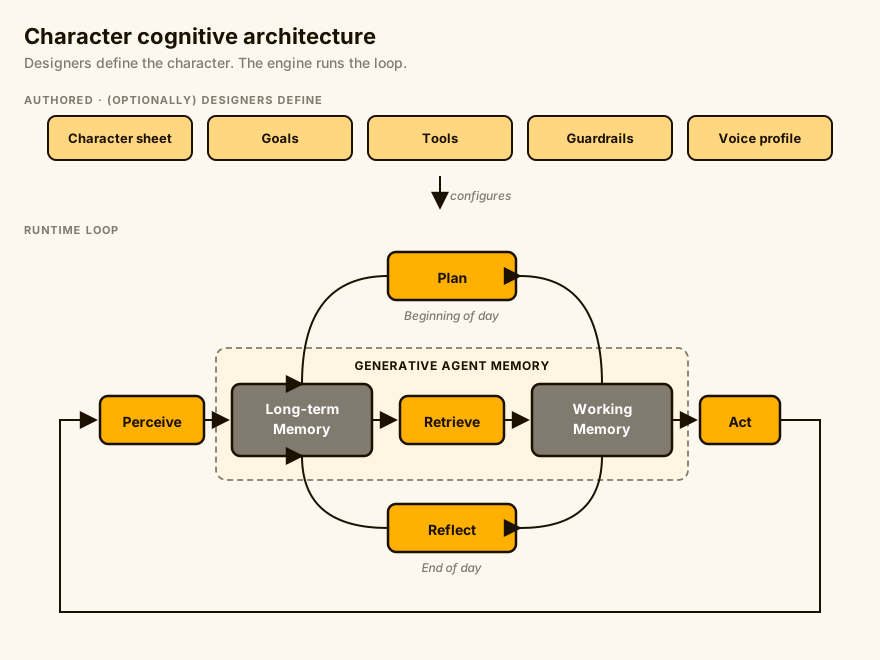
What Characters Can Do
Characters driven by the system exhibit a range of behaviors that emerge from their defined persona and the game world around them:
- Pursue needs autonomously: characters seek food when hungry, rest when tired, conversation when lonely, each at rates you configure per character
- Plan and replan: characters form plans at multiple timescales, from daily routines to immediate actions, and adapt when something unexpected happens
- React emotionally: a cowardly character feels fear when threatened, a brave one feels anger. Emotions influence what they do next and how they speak
- Remember: characters form memories from their experiences. Important events persist, routine ones fade. Characters recall relevant memories during conversation without scripted callbacks
- Build relationships: social interactions update how characters feel about each other. A character who is repeatedly kind builds trust. One who lies erodes it. Relationships shape future behavior and dialogue tone
How It Looks in Practice
A tavern keeper NPC might wake up in the morning, open their shop, greet regular customers warmly (because the relationship is positive), grow suspicious of a stranger who asks too many questions (because the emotional system flags the interaction), and later mention the stranger to a guard friend (because the memory persisted and the social system drives the behavior).
None of this is scripted. You defined the tavern keeper's persona, set their needs, and placed them in the world. The engine handled the rest.
Designer Control
Autonomous doesn't mean uncontrollable. You set the boundaries:
- Author the persona, traits, and goals that shape every decision
- Configure which needs matter and how urgently they drive behavior
- Gate content through the guardrails system to keep characters on-brand
- Use authored dialogue for critical story moments, with autonomous behavior filling the gaps between them